












The Animals That Kill the Most Humans: Why Mosquitoes Top the Deadliest List
Mosquitoes kill more humans each year than any other animal, with disease transmission driving most deaths worldwide. Humans rank second, followed by snakes, dogs, and other lesser-known but highly dangerous disease carriers.

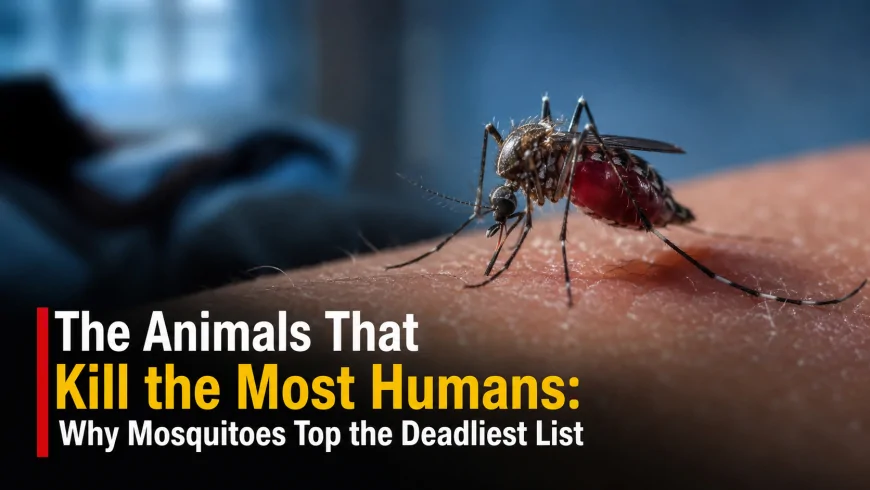
Mosquitoes are responsible for more human deaths each year than any other animal on Earth, according to global mortality estimates. Far from the popular fear of sharks, lions, or wolves, the world’s deadliest animals are often small creatures that spread infectious diseases. Humans rank second on the list, followed by snakes, dogs, and several overlooked parasites and insects that continue to pose serious public health risks in many parts of the world.
The ranking offers a stark reminder that the greatest animal threats to humans usually do not come from dramatic attacks in the wild. Instead, they come through bites, stings, or infections that can turn deadly—especially in places where access to healthcare, vaccination, sanitation, and prevention remains limited.
Ranked: Animals That Kill the Most Humans Each Year
| Rank | Animal | Estimated Human Deaths Per Year | Primary Threat |
|---|---|---|---|
| 1 | Mosquitoes | 760,000 | Disease transmission, including malaria, dengue, and yellow fever |
| 2 | Humans | 600,000 | Homicide |
| 3 | Snakes | 100,000 | Venomous bites |
| 4 | Dogs | 40,000 | Rabies |
| 5 | Freshwater snails | 14,000 | Schistosomiasis |
| 6 | Kissing bugs | 8,000 | Chagas disease |
| 7 | Sandflies | 5,000 | Leishmaniasis |
| 8 | Roundworms | 4,000 | Ascariasis |
| 9 | Scorpions | 3,000 | Venomous stings |
| 10 | Tapeworms | 2,000 | Cysticercosis |
Mosquitoes Are the Deadliest Because They Spread Disease
Mosquitoes do not kill through strength or direct attack. Their danger comes from what they carry. They are major vectors for some of the world’s most serious infectious diseases, including malaria, dengue, and yellow fever. That makes them far more deadly than larger predators that receive more public attention.
Global health data continues to show that mosquito-borne illness remains one of the biggest causes of preventable death, particularly in Africa and other tropical regions. Malaria alone still kills hundreds of thousands of people a year, with young children among the most vulnerable. This is why mosquito control, early diagnosis, vaccines, and access to treatment remain critical public health priorities.
Humans Rank Second on the List
Humans are the second-deadliest threat to humans, with an estimated 600,000 deaths annually linked to homicide. While this category is different from animal attacks or disease transmission, it underscores an uncomfortable reality: people themselves account for a large share of violent deaths worldwide.
The figure also highlights how the concept of “dangerous animals” can be broader than many people assume. In public imagination, danger is often associated with wild predators. In reality, social violence claims far more lives than many feared species ever do.
Snakes Remain a Major Killer in Vulnerable Regions
Snakes rank third, with around 100,000 deaths each year attributed to venomous bites. The burden is especially heavy in rural parts of Asia, Africa, and Latin America, where farmers, laborers, and children may be exposed to venomous species and face delays in receiving emergency care.
Snakebite deaths are often preventable, but outcomes worsen when antivenom is unavailable or healthcare facilities are too far away. In many low-resource communities, snakebite is still a neglected medical emergency despite its deadly toll.
Dogs Kill Through Rabies, Not Physical Force
Dogs are linked to an estimated 40,000 human deaths a year, primarily because of rabies rather than physical attacks. Rabies is almost always fatal once symptoms begin, yet it is also one of the most preventable infectious diseases with timely vaccination and post-exposure treatment.
This makes dog-related deaths a major health systems issue as much as an animal issue. Communities with limited access to vaccines, animal control, and public awareness are often the hardest hit.
The Overlooked Threat From Parasites and Insects
Several lesser-known animals on the list receive little attention in mainstream discussions but remain highly dangerous in specific regions.
Freshwater snails help spread schistosomiasis, a parasitic disease that continues to affect vulnerable populations with poor sanitation and unsafe water exposure. Kissing bugs are associated with Chagas disease, while sandflies transmit leishmaniasis. Roundworms and tapeworms, though rarely discussed in everyday conversation, can also lead to fatal complications when infections go untreated.
These animals are a reminder that public health risks are not always visible or dramatic. In many cases, the deadliest threats are linked to poverty, climate, sanitation, housing, and access to medical care.
Why Big Predators Do Not Top the List
The findings challenge long-held assumptions about which animals are most dangerous to humans. Sharks, wolves, and lions attract outsized fear because their attacks are dramatic and widely reported. But their annual death toll is far lower than that of disease-carrying insects and parasites.
In short, the animals people fear the most are not necessarily the ones that kill the most. The data shows that the world’s deadliest animals are often the ones people barely notice until it is too late.
What This Ranking Really Tells Us
The biggest lesson from the ranking is that animal-related deaths are deeply tied to public health infrastructure. Mosquito nets, vaccines, rabies control, antivenom access, clean water, sanitation, and early treatment can all save lives. In many cases, the deadliest animals become deadly because healthcare systems and prevention tools are unevenly available.
For readers, the takeaway is clear: the most dangerous animals on Earth are not always the largest, fastest, or fiercest. More often, they are the smallest—and the most effective at spreading disease. Understanding that reality is essential not only for public awareness, but also for shaping smarter health policies that can reduce preventable deaths around the world.
What's Your Reaction?
 Like
0
Like
0
 Dislike
0
Dislike
0
 Love
0
Love
0
 Funny
0
Funny
0
 Angry
0
Angry
0
 Sad
0
Sad
0
 Wow
0
Wow
0